FAQ
Frequently asked questions (classic Vischeck FAQ).
Colorblindness
Is there a cure for colorblindness?
No. Color blindness is almost always caused by an inherited condition that alters the photoreceptors (cone cells) in the eye. There is no way (yet) to restore normal function to these cells although some people are thinking about it!
What causes colorblindness?
See Webexhibits for an excellent description of the various causes and types of color blindness: https://www.webexhibits.org/causesofcolor/2A.html.
You might also like to read this article by Alex Wade. For a more general, kid-friendly introduction to color vision and color blindness, see this article.
I need to pass a color blindness test for work. What can I do?
Some jobs require their employees to take a color blindness test (often using the Ishihara plates). These tests are required by, among others, the FAA, the coastguard and most military and emergency services. Such tests generally prohibit the use of colored contact lenses or other devices that are claimed to alleviate the effects of color blindness. Unfortunately, if you really are color blind, there is very little you can do to pass these tests.
Will my child inherit color blindness?
Color blindness is usually caused by a problem in a gene carried on the X chromosome. Men do not pass their X chromosomes onto their sons, so a color blind man cannot pass his color blindness onto his son. Women, having two X chromosomes, can carry the color blindness gene and never know it. If there are men on the mother's side of the family who are color blind, there is a chance that her child will inherit this gene. It will usually only cause color blindness if the child is a boy. Very rarely, a mother will have color blindness herself. This means that she has two “color blind” X chromosomes. If she has a boy, he is almost certain to be color blind. The fact that the color blindness gene is on the X chromosome is the reason why men are about ten to twenty times more likely to be color blind than women.
According to a color test I'm red-green color blind, but I can tell the difference between red and green — how can this be?
'Red' and 'Green' are very broad categories. It is possible to have a red-green color deficit but still be able to distinguish many shades of “red” from many shades of “green”. In fact, color tests carefully select specific shades of red and green that are indistinguishable to people with a color deficit. Also, there are various degrees of color blindness. Someone with a mild deficit would be able to distinguish more reds and greens than someone with a more severe deficit.
How many people are colorblind?
About 8% of all males have some sort of color deficit, but for females it is about 1/2%. (See https://webexhibits.org/causesofcolor/2C.html.)
Will a color deficit prevent me from becoming a pilot?
It's complicated. See here for more details.
General Vischeck questions
Nothing happened when I hit “Submit”.
Do you have javascript enabled? Perhaps your ad-blocker is stopping the page running (you do use an ad-blocker don't you?).
Are you sure you are not colorblind? If you are, the 'simulated' image and the original one might look very similar.
The images popped up but the simulated version is a funny color.
The default setting for the color simulation model is “deuteranope - red/green color blind”. If you just want to simulate the effect of distance, you have to select the “Normal” color vision type.
VischeckURL
Didn't you have a version that ran on a whole webpage?
Yes once upon a time. This one is simpler. You can always take a screenshot and run it through... Note that modern phones typically have a colorblindness simulation mode anyway. Look under 'accessibility' or 'developer options'.
Is it accurate
How do you know that this is really what colorblind people see?
It is very difficult to be certain about this. The color vision models we use are based on a large body of research into human color vision. However, there is individual variation in color vision, even among 'normal' trichromats and a wide spectrum of different color vision abnormalities. The best we can say is that the simulations are broadlyconsistent with what is known about the physiology and genetics of color vision. The Brettel, Vienot and Mollon paper that the algorithm is based on has been widely cited in the scientific literature and is generally considered to be a good model of color vision deficiency. Finally, the algorithm has been tested to some degree on people who have colorblindness in only one eye. These people can compare the simulated image with what they see with their colorblind eye and report that the Brettel et al algorithm is broadly accurate. There are also unavoidable limitations in the display of color images on computer screens. Different monitors display colors differently and the colors you see will depend on the calibration of your monitor as well as monitor resolution and viewing distance. We can't tell what monitor (or phone) you are using and so we can't compensate for these differences. For this reason, the colors you see on your screen may not be exactly what a colorblind person would see in real life.
Daltonize
How did Daltonize get its name?
Daltonize was named after John Dalton, a scientist who wrote about colorblindness in the 18th Century and was, himself, colorblind. See https://en.wikipedia.org/wiki/John_Dalton for more information. We agree it's not a very descriptive name because Dalton was, in fact, colorblind and the algorithm is all about correcting images - we liked it at the time (2001 ish) because we were into things that ended in 'ize'... like TinyEyes.
How does it work?
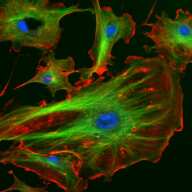
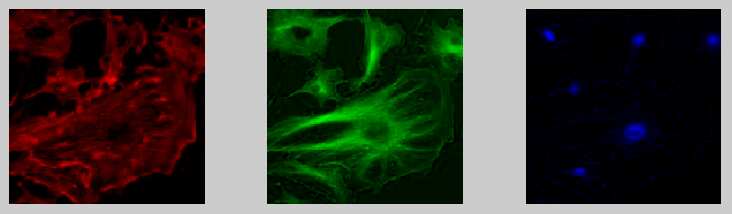
Color images can be split into three color “dimensions”. One way to do this is to split them into the red, green and blue planes used to control video displays.
Another way is to split them into a bright/dark dimension, a red/green dimension and a blue/yellow dimension.
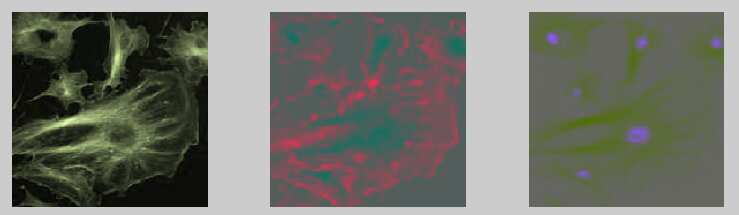
Most color blind people (dichromats) cannot see the red/green dimension of an image, but they still see the blue/yellow and light/dark dimensions. Daltonize analyzes the image to see if there is significant information (variation) in the red/green dimension. If there is, it tries to convert this into variations in the light/dark and blue/yellow dimensions.
Won't it just introduce other color confusions?
Daltonize tries to maximize the information available to dichromats. By shifting information from red/green variations into the light/dark and blue/yellow dimensions, there is a chance that it will reduce contrast in those dimensions. However, by analyzing the variations in all three color dimensions beforehand, these problems are kept to a minimum. In practice, we rarely see a case where Daltonize introduces color confusions where none existed before.
The colors look funny / unnatural
Our aim is to increase the visibility of things that would normally be invisible to color blind people. To do this, we vary the colors along the blue/yellow and light/dark dimensions. This can make some things look odd (for example, it might make red apples look a little bluish). You can make things look a little better by forcing Daltonize to only use the light/dark dimension to compensate for red/green variations. Ultimately, the trade off is between having things look a little strange and not being able to see them at all.
It doesn't seem to do anything.
If your image contains very little variation in the red/green dimension, Daltonize has no work to do. In other words, the image will be just as visible to a color blind person as to a normal. Congratulations!
You can force Daltonize to work harder by increasing the numbers you enter in the parameters box. Sometimes, the parameters you enter (the numbers underneath the filename) will prevent Daltonize from doing much to the image. Allowing it to use the blue/yellow dimension as well might result in a significant improvement.
What do the numbers in the boxes mean exactly?
The top number is the red-green stretch factor. It says how much the Daltonize algorithm will stretch the red-green axis of the input image. A large RG stretch will make reds redder and greens greener. Many people who are color blind actually have some limited red/green vision. By stretching the RG axis in an image, these people will see red/green variations that would not normally be visible to them. Setting this value to “1” means it will not change.
The other two numbers are the luminance and blue/yellow projection scales. These tell the Daltonize algorithm how much it is allowed to project red/green variations into the luminance and blue/yellow dimensions.
In particular, you might want to experiment with the blue/yellow projection scale. If images look “unnatural” after Daltonize, it is usually because variations in the blue/yellow dimension are being introduced. Setting this value to “0” (no projection onto the blue/yellow axis) will make Daltonized images look more natural at the expense of reducing the efficiency somewhat.
Why not distinguish reds and greens with different texture patterns / flashing colors / borders?
We tried to make the color transformation that Daltonize performs as subtle as possible. This has the advantage that the images it generates still look reasonable to someone who is not color blind. Our tests with other methods led us to conclude that the algorithm we present here is a good one. But if you come up with something even better we'd be interested to hear from you.
Can I use the images this generates in a book / newspaper article / web page / magazine / Hollywood movie?
In general, yes. We don't accept any responsibility for anything you do with the images - this is all just for fun!
Can I get the Daltonize engine as a stand-alone package (like the Vischeck engine)?
Everything is available on the Github Repo under a GPL license for open source use - knock yourself out!
My company would like to use this in a commercial product.
The Daltonize algorithm was originally developed at Stanford University. Commercial rights are held by the inventors. We can help with consultancy and support for commercial implementations. Contact vischeck@vischeck.com to discuss your needs.
General
It has been a long time right?
We have all literally raised infants to adulthood and beyond since this website was launched. The C++ code from 2000 compiles more or less without change.
Still stuck? Contact vischeck@vischeck.com.